‘The Odyssey’ Hits Theaters: How Emily Wilson’s Groundbreaking Translation Shaped Christopher Nolan’s Anti-War Epic
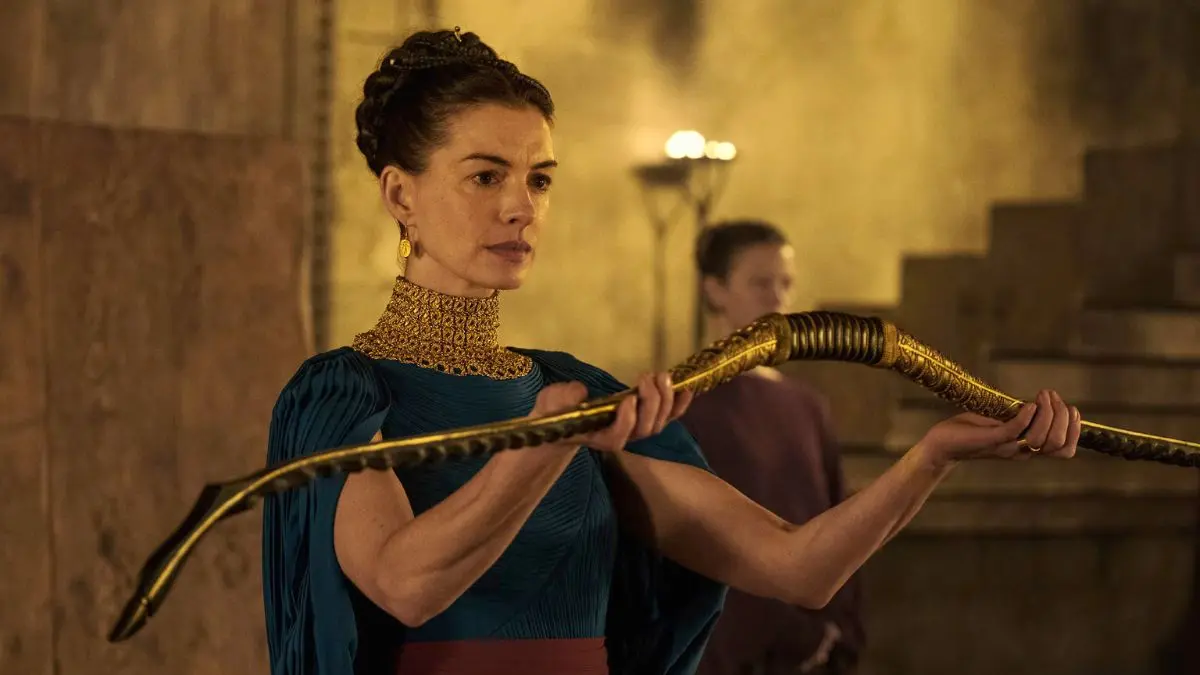
With the theatrical release of The Odyssey today, Christopher Nolan makes his debut in classical myth. The Oscar-winning director has put to one side the noir, comic book fare, sci-fi, war pictures and historical biopics he is known for to take on a cornerstone of the Western canon. In this Homeric epic, he follows Odysseus’s arduous way back to Ithaca in the wake of Troy’s fall.
On the surface, the subject matter may not be what one expects from Nolan, but the story is a natural fit for the preoccupations that have defined his best work: the impossibility of getting home, memory, guilt and temporal distortion, as well as the kind of trauma that lingers.
There is no mistaking the film for a mere spectacle, though it is being treated as a major IMAX event with an A-list cast including Matt Damon, Tom Holland, Anne Hathaway, Zendaya, Charlize Theron, Lupita Nyong’o and Robert Pattinson. The substance of Odyssey runs much deeper than its production values. Nolan has made something subversively feminist and unapologetically pacifist; instead of putting the warrior hero on a pedestal, he zeroes in on the psychological shrapnel of conflict and those who make Odysseus face up to what he has repressed. For the provenance of such an approach, one needs only consider Emily Wilson’s English translation, which the director has put forward as his principal inspiration.
The Power of the “Complicated” Hero
One needs a firm narrative anchor to put one’s own spin on a text as multilayered and endlessly reworked as Homer’s. Nolan found his in the 2017 translation by Wilson, though he was not without reference to other historical readings. He made much of her well-known opening: “Tell me about a complicated man.”
It is an adjective that changes how the protagonist is perceived. Where the academic or traditionalist would have you see Odysseus as wily, crafty, or ingenious, Wilson has him as something else entirely. She opted for “complicated” to do justice to polytropos, that elusive Greek word with all its baggage of deception, displacement and moral ambiguity. In doing so, she presents a veteran who is as much a product of the world’s unrelenting violence and his own decisions as he is a master strategist; a figure at once fractured and contradictory.
The Impact of Emily Wilson’s Translation
In 2017, Wilson put her name in the history books as the first woman to render a full English translation of the Odyssey from the Homeric Greek. The British-American classicist and University of Pennsylvania professor has since become something of a cultural phenomenon for it, but one would be hard-pressed to say that is where her impact ends.
Her translation has been met with considerable praise for its philological exactness and the way it conveys the social and moral undercurrents of the work with no quarter given. She eschews any pretension in favour of verse that is at once sharp and easy to read. Working in iambic pentameter, Wilson captures the original’s musicality and force of pace. Her word choice is unadorned; she does not oversimplify Homer, nor does she modernise him for today’s tastes. Instead, she removes the romantic varnish of centuries past to let the text’s more sombre elements show.
Take the case of the enslaved women in Odysseus’s home. Previous translators have had a habit of putting a soft edge on the language there, but Wilson is explicit. It is not an exercise in rewriting so much as a matter of not turning a blind eye to the poem’s built-in hierarchy and violence. The result is a version that moves the focus off Odysseus, the hero and onto a more complicated world of power and female presence.
Decoding Nolan’s Visual Text
There is also a logic to Nolan’s adaptation in Wilson’s narrative approach. One could view the Odyssey as little more than an adventure serial and end up with a list of special effects: the suitors’ demise, Polyphemus, the Sirens, Circe and Calypso. Nolan provides the requisite spectacle, of course, but what makes the film tick is the psychological residue of Troy. It is the chasm between the wartime hero of legend and the man who comes home, the broken family and the burden of the past that serve as the movie’s real driving force.
One could say the “complicated man” is a theme that runs through all of Nolan’s work. His films are populated by protagonists whose obsessions and moral ambiguities are their defining features; they are brilliant, driven types with the power to alter reality, but in the end, they are as much prisoners of their guilt and self-deception as they are free agents. This holds true from Memento on up to Oppenheimer. Take Odysseus, for instance: in Wilson’s telling, he is more than just the conqueror of Troy. He comes across as a survivor, one who has been left with his trauma and is now on the run from his past in search of home.
This perspective cements the film’s anti-war and feminist credentials. It rejects the glory of combat to focus entirely on its human cost. Simultaneously, figures like Circe, Calypso, Penelope, Helen, and Clytemnestra are elevated from passive observers or temporary obstacles into major catalysts of crisis and self-reflection. They do not exist simply to push the plot forward; they force both Odysseus and the audience to look directly at the collateral damage that classical epics traditionally leave in the margins.