Christopher Nolan Defends Modern Accents and Dialogue in ‘The Odyssey’
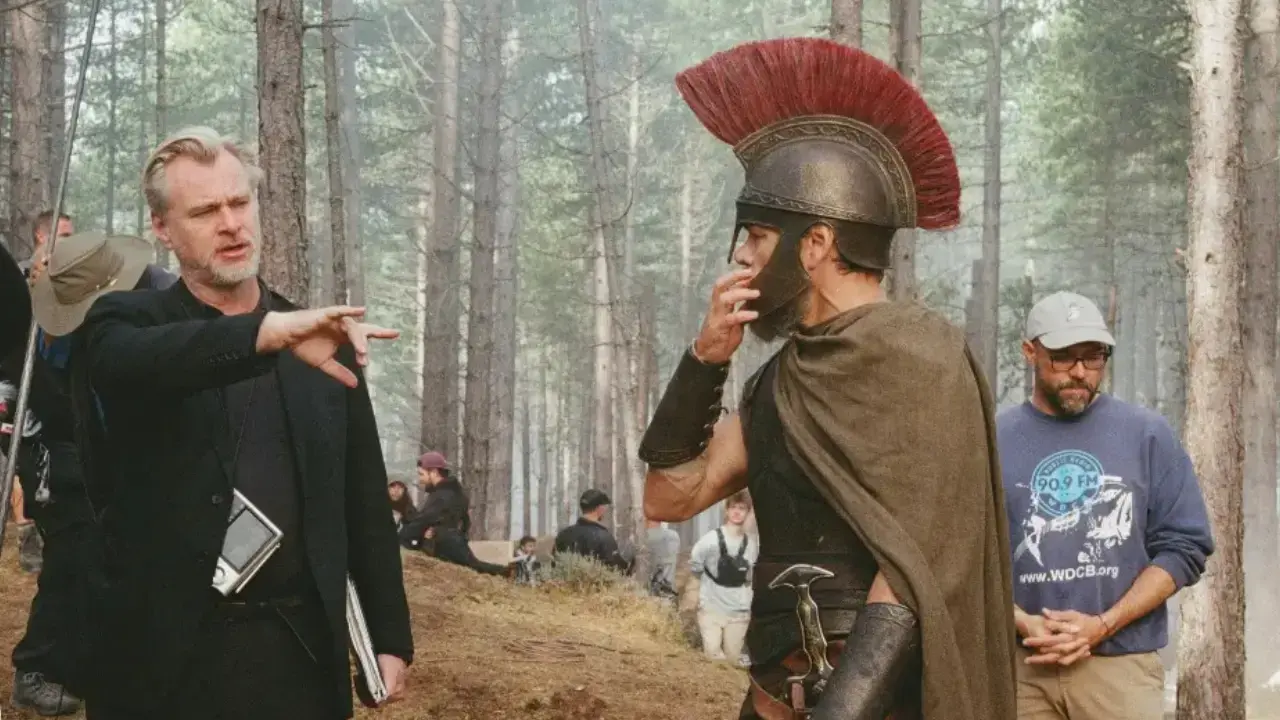
The filmmaker talks about swapping out midcentury Hollywood tropes for an emotionally immediate and accessible version of Homer’s epic.
Christopher Nolan is clearing the air on the artistic choices behind his highly anticipated adaptation of The Odyssey, and why the film doesn’t feature old-fashioned language, awkward historical dialects or strict period verisimilitude. The upcoming tentpole may be an adaptation of Homer’s definitive epic poem, but the director said his main goal was to build an emotional connection with modern-day audiences, rather than replicate the grand, rigid swords-and-sandals formulas popularized by midcentury Hollywood.
Ditching the Midcentury Epic Formula
Since the first trailers dropped, online film circles have been debating why characters like Telemachus (played by Tom Holland) speak in a modern American accent. A moment that is especially analyzed is when the young character refers to Odysseus as just “Dad” as opposed to the more solemn historic terminology that one might expect.
These creative swings were entirely intentional, based on his reading of the source material, Nolan told The Telegraph. “You read the poem, and it’s very earthy and accessible,” Nolan said.
For the director, Homer’s classic text shouldn’t look like a distant, overly ritualistic museum piece on the big screen. He wanted to take viewers into an entirely unfamiliar world, but one that was inhabited by characters with emotions and family connections that we all know about.
“What I was trying to do with this film was to take the present-day audience and put them in a world that they could easily relate to, an exotic world, a world they hopefully have never seen in the movies before,” he said.
Balancing Practical Scale with Mythic Fiction
Nolan said he deliberately turned away from the stylistic templates of the Hollywood epics of the 1950s and 1960s, arguing that those classic films often created their versions of Greece and Rome out of romanticized paintings, huge, static sets, and dialogue that was completely alien to everyday speech.
“But I wanted them to engage with the emotional life of the characters,” Nolan continued. “And that’s why I didn’t want to fall into the trap of reproducing, in a way, the Hollywood style of the ’50s or ’60s, much of which was based on that kind of romantic art and so on that reinterpreted Greek myths and the classical world.”
That approach doesn’t mean Nolan gave up on historical scale. As always, the director shot on location, used gigantic custom-made ships and a lot of practical effects to capture the sheer weight of Odysseus’s journey. But it was never his intention that the film should be a hard archaeological document.
Of course, this is a myth, with gods, monsters and a Cyclops, so Nolan is less interested in historical accuracy (which is impossible to pin down) than in dramatic stakes.
A Fresh Take on a Classical Foundational Text
The director’s approach is true to his past philosophy about adaptations: he can’t compete with the highly personal imagery that readers have been projecting onto The Odyssey for centuries. Ultimately, his sense of responsibility is to provide a serious, respectful but separate reinterpretation.
“We wanted to try and be a little bit fresher than that, a little more immediate and accessible,” Nolan explained.
The Odyssey tells the story of Odysseus’s long, hard journey home to Ithaca after the Trojan War. The cast is an all-star line-up including Matt Damon in the lead role, with Anne Hathaway, Tom Holland, Zendaya, Robert Pattinson, Lupita Nyong’o and Charlize Theron.
Instead of trying to achieve an impossible historical re-creation, Nolan is hoping that the audience will find more commonality in the universal fears, desires, and connections of the characters that populate his mythological world.