‘Heartstopper Forever’ Review: Netflix’s film does not do justice to the universe created by Alice Oseman
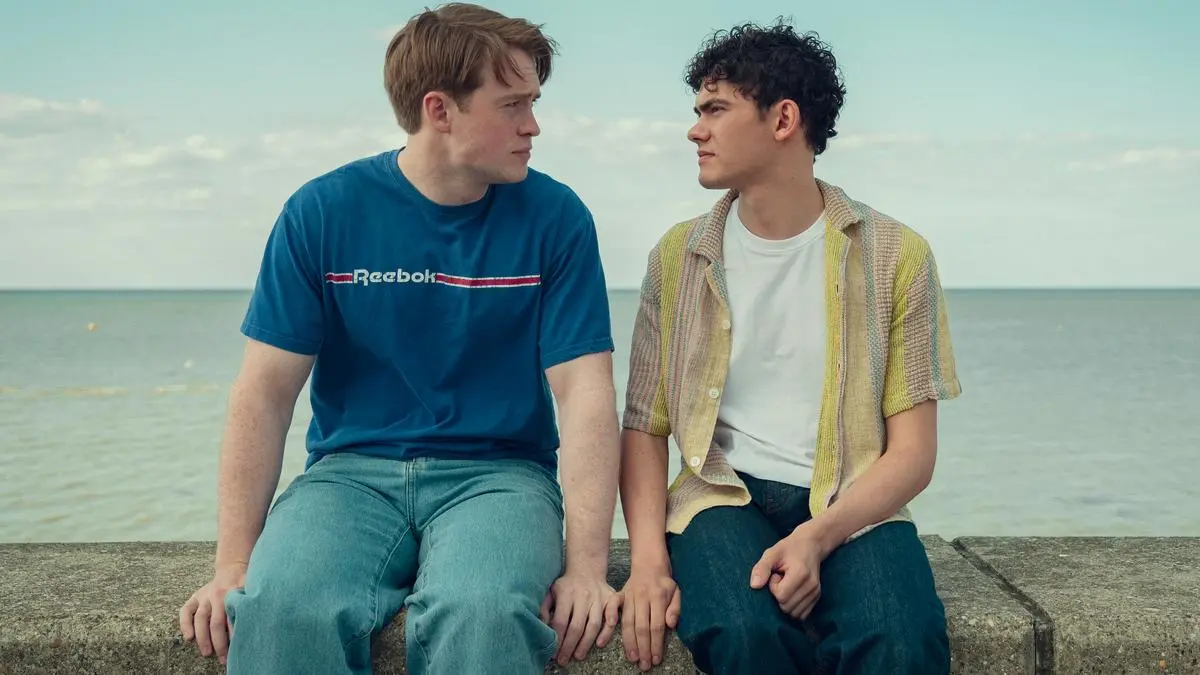
Heartstopper Forever concludes one of the most important romance franchises of the streaming era. Since the first season premiered on Netflix, the adaptation of Alice Oseman’s comics has won over millions of fans by telling a queer love story with rare delicacy, transforming Charlie (Joe Locke) and Nick (Kit Connor) into iconic characters of modern television. It was to be expected, therefore, that the streaming giant would offer the franchise a conclusion worthy of the series’ legacy. However, the final chapter — now presented in the form of a 1-hour-and-54-minute feature film — may not deliver the closure that this story, and its audience, truly deserves.
The plot follows Charlie Spring, Nick Nelson, and their friends in their final year of high school. With graduation fast approaching, everyone has to deal with the fear of the future, universities, farewells, and the inevitable changes that come with the “end of adolescence.” It’s a classic coming-of-age story, but told with the sensitivity that has always defined the series.
A Compelling Shift in the Central Dynamic
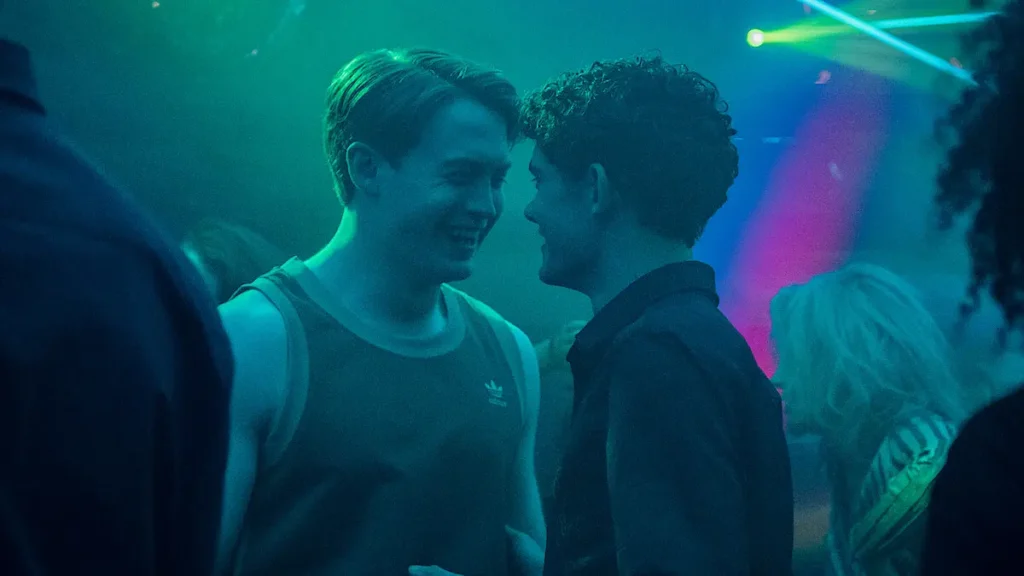
The first major success of the film lies precisely in the inversion of the dynamic between the protagonists. For much of the first three seasons, the heaviest conflicts fell on Charlie. It was he who, most of the time, needed support, who faced his insecurities and mental health issues, while Nick often took on the role of the emotional support in the relationship. In ‘Forever,’ that changes completely.
Charlie appears more confident, more mature, and finally at peace with himself. After everything he has been through, it is moving to watch a character who now knows how to stand his ground, knows what he wants, and exudes a confidence that was absent in previous seasons. On the other hand, it is Nick who is having a difficult time. Still caught up in issues with his brother and his family in general, Nick appears much more insecure about his future and completely terrified of the possibility of repeating his father’s mistakes, becoming the emotional anchor for much of the film.
All the character development built over the past few years culminates in a dynamic of realistic and engaging intimacy, which highlights the maturation of the relationship between Charlie and Nick. The way the film addresses the protagonists’ sexuality, for example, also refreshes this universe in a very welcome manner. Not that Heartstopper needed sex scenes, but at this moment, their inclusion feels completely organic. Oseman introduces this aspect of the characters’ lives very naturally, without turning intimacy into a spectacle, respecting the delicate tone characteristic of the work.
The Limitations of the Feature Film Runtime
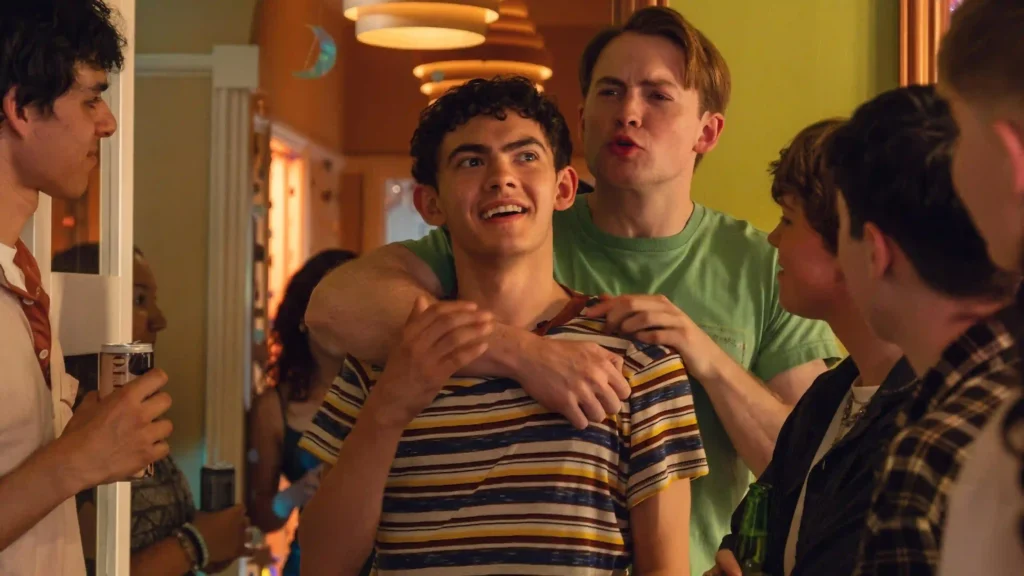
Between the script’s successes and the excellent performances of the cast, Heartstopper Forever gets lost precisely in its greatest limitation: being a movie. Without the usual space that the series always had to develop its universe, Alice Oseman finds herself faced with the thankless task of finishing the story built over three seasons in less than two hours.
This limitation mainly affects the characters who orbit around Charlie and Nick. Tara, Darcy, Tori, Isaac, and Imogen barely find space to conclude their narratives. Except for Tao and Elle — who are the only friends to receive any more consistent development — the other classmates are reduced to brief appearances, functioning almost exclusively as support for the protagonists’ narrative.
It is true that Heartstopper has always been, above all, the story of Charlie and Nick. Even so, after more than 20 episodes dedicated to building this group of friends with such care, it is inevitable to feel that something was left behind. The film fulfills the mission of concluding the central romance, but leaves a bittersweet taste by forgoing more complete farewells for characters who have also won over the audience over the years.
Pacing Issues and Nostalgic Fan Service
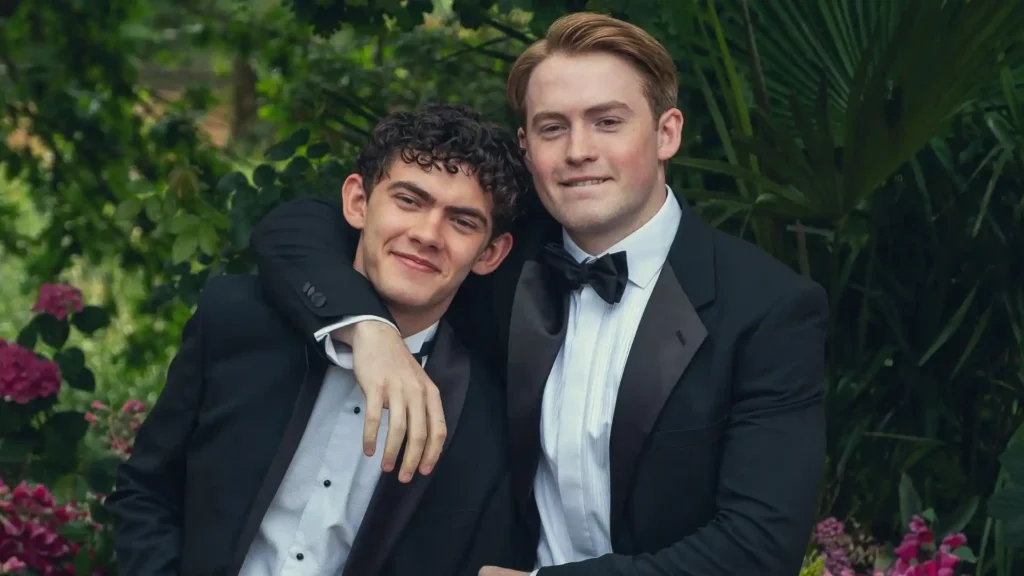
Moreover, some of the conflicts that drive the narrative end up appearing in a rather unconvincing manner. The main misunderstanding between Charlie and Nick — and rest assured, this review is spoiler-free — arises so abruptly that it sounds artificial, as if it exists solely to create dramatic tension. Instead of seeming like a natural consequence of the characters’ development, the conflict risks leaving part of the audience wondering if it was really serious enough to trigger the events that follow.
Other script problems also arise as the story progresses, especially when the film seems to abandon the maturity that Charlie and Nick appear to have achieved in the first half of the narrative.
With such limited screen time, Heartstopper Forever navigates between resolving its characters’ conflicts and paying tribute to its own journey. The various direct references to the first season certainly evoke nostalgia among fans, but in this context, they end up sounding more like an exercise in fan service than as elements truly necessary to the narrative. In a film that already struggles with time constraints, these sequences could have made way for more developed dialogs and conflicts, giving greater emotional weight to the resolutions proposed by the script.
A Generational Milestone for Queer Cinema
Heartstopper bids farewell to television in a satisfying manner, but it leaves the feeling that it could have delivered a conclusion much more worthy of everything that Alice Oseman, Joe Locke, Kit Connor, and the rest of the excellent cast have built over the years. For those who, like me, fell in love with this universe and its characters, the numerous tributes to the beginning of Charlie and Nick’s journey certainly are sure to warm your heart and make it easier to overlook some of the script’s (and format’s) limitations.
At a time when LGBTQIA+ people continue to see their rights threatened or even revoked in different parts of the world — something the brilliant Elle sensitively reminds us of in a moment in the film — Heartstopper Forever concludes one of the most beautiful and important young love stories of recent years.
Even limited by the format, the film reaffirms why Alice Oseman’s work has become so significant: good love stories always deserve to be told and above all, queer love stories have the power to move, represent, and mark an entire generation. Maybe this isn’t the perfect ending, but it’s a farewell that reinforces why Charlie and Nick will forever remain in the memory of those who followed their journey up to this point.