After Yellowstone, Dutton Ranch marks a definitive turning point for the character of Beth
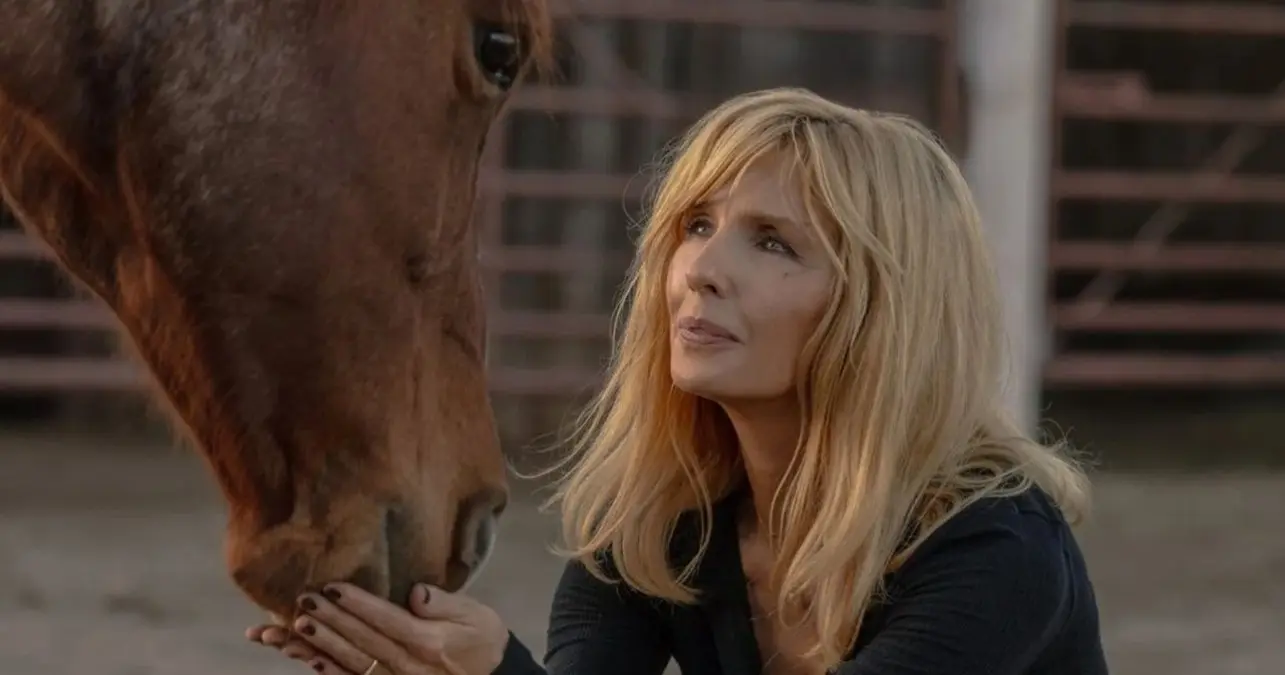
There is a definite, more subdued quality to Beth Dutton’s path in the first season of Dutton Ranch. The Taylor Sheridan spin-off, which puts the spotlight on the deadly alliance between Kelly Reilly’s Beth and Cole Hauser’s Rip Wheeler, has made an understated yet significant alteration to its star, one that involves toning down her reliance on cigarettes.
For five seasons of Yellowstone, high-proof liquor and nicotine were Beth’s armor, a form of visual shorthand for how she put up with the crushing weight of old family trauma or saw out a cutthroat negotiation. But in the season one closer of the new series, a small character makes a point about something deeper at work.
After the fire in Montana left their homestead in ruins, Beth and Rip have made Texas their new home, putting in time at Rio Paloma for the 10-Petal Ranch. It was only a matter of time before they were drawn into the web of a local cartel. Upon learning the ranch was being used as a front for a cross-border drug ring via the livestock, Beth and Rip made it their business to interfere, much to the chagrin of Mariano Reyes. Even after Rip and his men put down a raid on the property, the win is bittersweet with Carter gone. The boy had run off in the last episode and is now somewhere in the line of fire. Confronted by Everett, Beth voices a kind of suffocating fear that the world is set to ruin all she has.
Everett puts a cigarette in her hand. She turns it down. The show does not make a spectacle of it; there is no formal declaration of sobriety. The moment is effective precisely because of its restraint. Where on Yellowstone a smoke was a Pavlovian thing, an extension of the self-destructive way she went about running her father’s empire and shouldering every crisis, here we are seeing a woman with more self-possession. One who can be just as protective of her own, but is starting to let go of the habits that served to sabotage her.
It shows in how she deals with Carter, too. With the teenager having bolted, Beth forgoes the usual anger and sarcasm to put on the table an admission of her failings and a vow to improve on them. It is a rare concession from someone so given to making a weapon of her weaknesses.
Then there is the matter of John Dutton. His death hangs over everything. Beth is not simply defending his legacy anymore; she has to carry it. The demands of Rip and Carter have seen her put some of her more volatile tendencies back in Montana.
One could say the series has not entirely rewritten her past; in the fourth episode, she makes good use of a cigarette to put the torch to a vet’s trailer in order to dispose of some forged papers. But that was a tool for the job, not an emotional crutch. Reilly has said as much, contending that an overnight change would be unearned and that a slow transition is more fitting. The finale bears this out. In declining the cigarette when she is at her most anxious, Beth is making a statement: she is done merely surviving the aftermath and is looking to put together a future.